

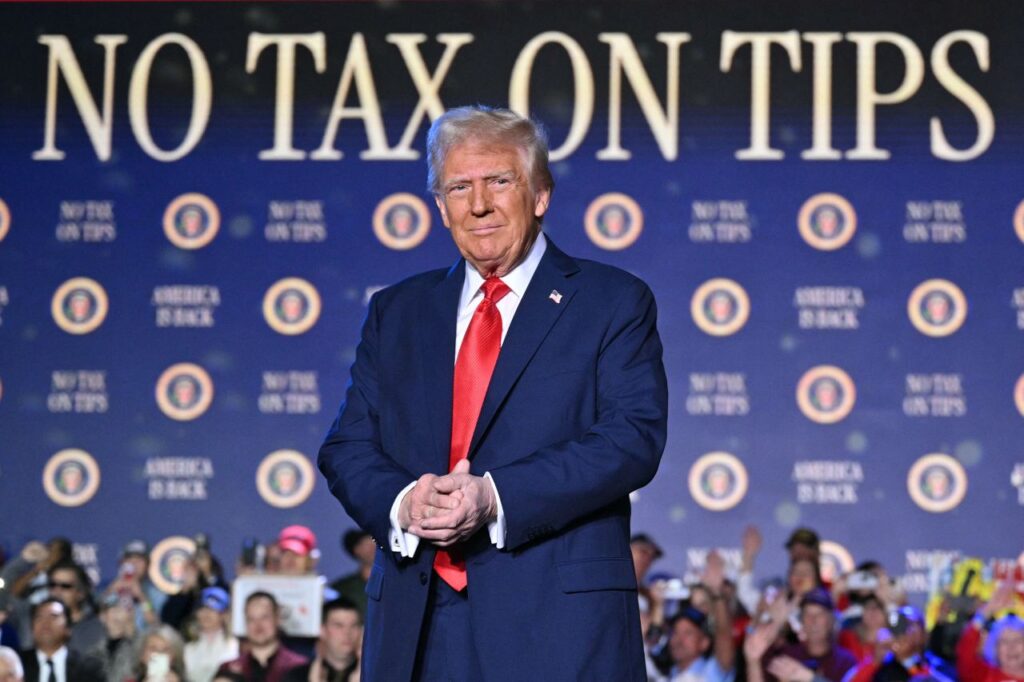
Trump’s May 2025 policies reshape the U.S. economy and markets.
At GLHR Investing, we’re cutting through the noise to track how policy moves impact your portfolio. This week, President Donald Trump’s actions—centered on tariff investigations and trade policy signals—sent the stock market on a volatile ride, with the S&P 500 (SPY) dropping significantly. With inflation at 3% and consumer sentiment at a 12-year low, how did Trump’s moves affect investors? Here’s a breakdown of his key actions for April 14–18, 2025, and their ripple effects on the market.
- Key Trump Actions (April 14–18, 2025):
- Critical Minerals Tariff Investigation (April 15):
- Trump signed an Executive Order launching a Section 232 investigation into imports of processed critical minerals (e.g., rare earths, lithium), critical for automakers, aerospace, semiconductors, and defense. The probe could lead to new tariffs if imports are deemed a national security threat, with a report due in months.
- Semiconductor Tariff Signals (April 14–16):
- Trump announced a forthcoming tariff rate on imported semiconductors, with “flexibility” for some companies, stirring uncertainty. The Commerce Department initiated a probe into chip imports, a precursor to potential tariffs, amplifying tech sector fears.
- Tariff Policy Continuity:
- The 90-day pause on reciprocal tariffs (10% baseline, up to 50% on China) from April 8 held, with no new escalations or pauses confirmed this week. However, China’s 84% retaliatory tariffs and rare earth export bans tightened global supply chains, impacting tech and auto stocks.
- Regulatory and Trade Posturing:
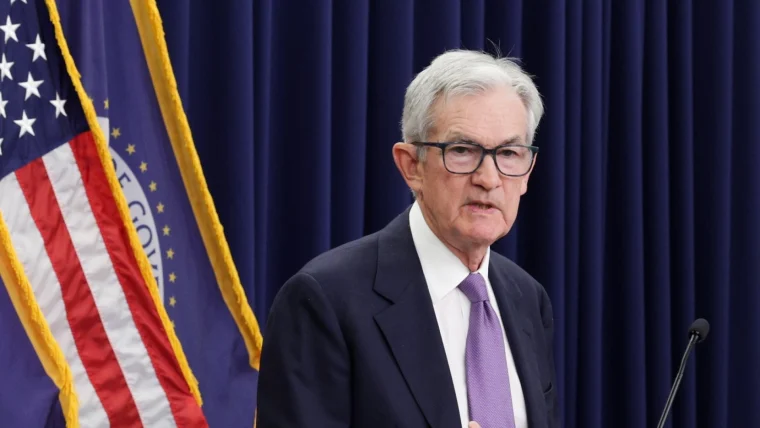
- Commerce Secretary Howard Lutnick and U.S. Trade Representative Jamieson Greer signaled ongoing trade talks but offered no concrete deals, maintaining market uncertainty. Trump’s insistence on tariffs as “medicine” for economic competitiveness clashed with Federal Reserve Chair Jerome Powell’s warnings of inflation and growth risks.
- Pharmaceutical Import Probe:
- The Commerce Department launched an investigation into pharmaceutical imports, raising fears of cost hikes for healthcare firms reliant on global supply chains.
- Critical Minerals Tariff Investigation (April 15):
- Stock Market Impact (April 14–18, 2025):
- S&P 500 (SPY) Performance:
- Current Price: $513.88 (April 21, 2025), down 2.4% from the previous close of $526.41, reflecting a volatile week. Intraday trading on April 21 saw SPY dip to $508.545 before recovering slightly.
- Weekly Trend: SPY fell from $536.9 on April 14 to $513.88 by April 21, a 4.3% weekly drop, driven by tariff probes and Powell’s warnings. The index lost 2.2% on April 16 alone, with tech stocks leading declines.
- Year-to-Date: SPY is down 13.93% YTD, erasing post-election gains and approaching bear market territory (20% below its February peak of $613.23), the worst presidential term start since 1957.
- Sector-Specific Impacts:
- Technology:
- The semiconductor probe and China’s rare earth export ban hammered tech stocks. NVIDIA (NVDA) slumped 6.87% on April 16 after projecting a $5.5 billion hit from chip export curbs, dragging the Nasdaq down 3.1%. Advanced Micro Devices (AMD) reported an $800 million loss from China curbs.
- Apple (AAPL) fell 9% mid-week, losing $293 billion in market cap alongside Microsoft and NVIDIA, as tariff fears hit supply chains (90% of chips from Asia).
- The tech sector (SPLRCT) dropped 4.3% on April 16, with SPY’s tech-heavy components amplifying losses.
- Automotive:
- Stellantis paused Mexican and Canadian plants, citing 25% tariffs, impacting auto ETFs (CARZ) and suppliers like GE Aerospace (down 10%). Investors fear vehicle price hikes of $3,000–$5,000, per industry estimates.
- Retail and Consumer Discretionary:
- Retail stocks like Walmart held steady due to domestic sourcing (50% of goods), but Nike and Amazon faced pressure from potential tariff-driven cost hikes. The consumer discretionary ETF (XLY) fell 3%, reflecting spending fears.
- J.B. Hunt Transport Services (JBHT) tumbled 7.7% on April 16, despite solid earnings, as tariff uncertainty clouded logistics forecasts.
- Safe Havens:
- Gold surged 3% to $3,300/ounce, with Goldman Sachs forecasting $3,700 by year-end, as investors fled equities. The utilities sector (SPLRCU) gained 1%, offering stability amid volatility.
- Technology:
- Market Volatility:
- The CBOE Volatility Index (VIX) hit 40.86 on April 16, signaling high investor fear, though it eased slightly by week’s end.
- The S&P 500’s 2.2% drop on April 16 was among its worst days, with the Dow falling 699.57 points (1.7%) and Nasdaq sinking 516.01 points (3.1%).
- X posts described a “financial forest fire,” with the Dow dropping 800–1,190 points in some sessions, though these claims align with verified data of 699–1,014-point drops.
- S&P 500 (SPY) Performance:
- Economic Context and Market Drivers:
- Tariff Uncertainty:
- The critical minerals and semiconductor probes signaled potential new tariffs, raising fears of supply chain disruptions. Powell warned of “unprecedented” tariff effects, projecting inflation above 4% and slower growth, which spooked investors.
- China’s rare earth export suspension tightened tech supply chains, with ASML forecasting uncertainty for 2025–2026, further pressuring chipmakers.
- Consumer Sentiment:
- Consumer confidence hit a 12-year low (Conference Board Index: 50.8), with retail spending down 13%. Tariff fears drove expectations of 6.7% inflation, prompting cuts in discretionary spending.
- The New York Fed’s survey showed a 44% probability of higher unemployment by 2026, the worst outlook since April 2020, fueling market pessimism.
- Recession Fears:
- J.P. Morgan raised its 2025 recession probability to 60%, with Goldman Sachs at 45%, citing tariff-driven growth slowdowns. The World Trade Organization projected a 0.2–1.5% global trade decline in 2025.
- The Atlanta Fed’s GDP Now estimate pegged Q1 2025 GDP at -2.8%, contrasting with industry forecasts of 2.5%, adding to investor unease.
- Bond Market Reaction:
- Safe-haven demand pushed 10-year Treasury yields to 4.22%, with investors shifting from equities to bonds, exacerbating stock declines.
- Tariff Uncertainty:
- Investor Considerations:
- Market Impact Summary:
- Trump’s tariff probes and trade signals this week drove a 4.3% SPY drop ($536.9 to $513.88), with tech and auto stocks hit hardest. The S&P 500’s proximity to bear market territory (17% below February peak) reflects investor fears of prolonged trade wars.
- The tariff pause’s positive effect from April 8 faded, as new probes reignited uncertainty, erasing gains from the prior week’s 5.7% SPY rally.
- Opportunities:
- Short-Term: Buy gold ETFs (GLD) or utilities (XLU) on dips, as they outperformed with 3% and 1% gains, respectively. Walmart’s domestic focus makes it a safe retail play.
- Long-Term: Infrastructure ETFs (IFRA) could benefit from domestic manufacturing if tariffs persist, though timing remains uncertain.
- Risks:
- Tech stocks (e.g., NVIDIA, Apple) face ongoing pressure from chip tariffs and supply chain disruptions, with potential 20–30% cost hikes.
- Auto and retail sectors risk margin squeezes if tariffs resume, with consumer spending already down 13%.
- A 60% recession risk and rising inflation expectations (6.7%) threaten broader market stability.
- Strategy:
- Allocate 5–10% to safe havens (gold, bonds) to hedge volatility. Avoid tech-heavy ETFs (XLK) until tariff clarity emerges.
- Monitor Q1 earnings (April 23–30) from tech (NVIDIA, Apple) and retail (Walmart), plus tariff updates by April 30, for market direction.
- Market Impact Summary:
- Why It Matters: Trump’s moves this week—launching critical minerals and semiconductor probes—deepened market uncertainty, driving a 4.3% SPY decline and pushing the S&P 500 closer to a bear market. While gold and utilities offer refuge, tech and auto stocks face tariff-driven risks. At GLHR Investing, we’re here to help you navigate this volatility and seize opportunities in a turbulent market.
Stay sharp with GLHR Investing—let’s build wealth through the chaos.