

Trump’s April 2025 policies fuel stock market swings.
At GLHR Investing, we’re dissecting the policies that drive market swings. In April 2025, President Donald Trump’s aggressive tariff agenda, attacks on Federal Reserve Chair Jerome Powell, and trade policy pivots triggered unprecedented volatility, pushing the S&P 500 (SPY) near bear market territory. With inflation at 3% and consumer sentiment at a 12-year low, how did Trump’s actions shape the market, and what’s on the horizon for May? Here’s a comprehensive look at his April moves, their impact, and what investors can expect next.
- Trump’s Key Activities in April 2025:
- Tariff Announcements and Rollout (April 2–8):
- On April 2, Trump unveiled “Liberation Day” tariffs: a 10% baseline on all imports, 25% on Canada/Mexico, 54% on China, and up to 50% on select countries, citing trade deficits as a national emergency.
- The announcement sparked a global market rout, wiping $5 trillion from equities in 48 hours, with SPY dropping 6% on April 3–4, the worst week since the 2020 COVID crash.
- On April 8, Trump paused most reciprocal tariffs for 90 days (except China’s, raised to 125%), citing negotiations with 75 countries. This spurred a historic 9.5% SPY surge on April 9, the third-best day since 1940.
- Critical Minerals and Semiconductor Probes (April 14–16):
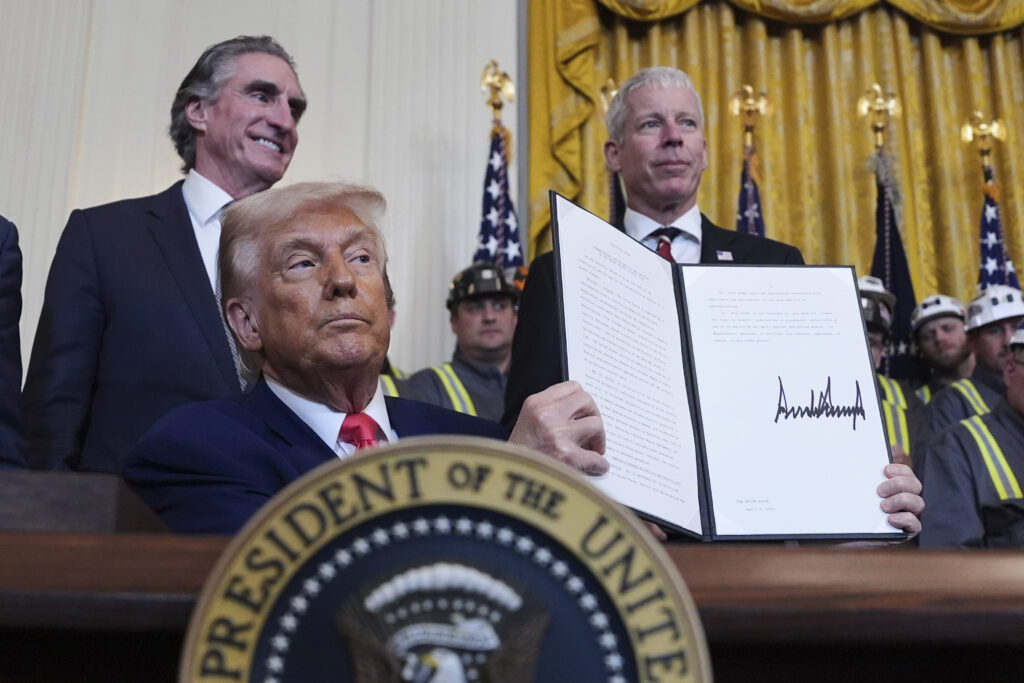
- On April 15, Trump signed an Executive Order launching a Section 232 investigation into critical minerals imports (e.g., rare earths, lithium), potentially leading to new tariffs for automakers, tech, and defense.
- On April 14–16, he signaled semiconductor tariffs with “flexibility” for some firms and initiated a Commerce Department probe, raising fears of chip cost hikes.
- China’s retaliatory rare earth export ban intensified supply chain concerns, hitting tech and auto stocks.
- Attacks on Federal Reserve Chair Jerome Powell (April 16–21):
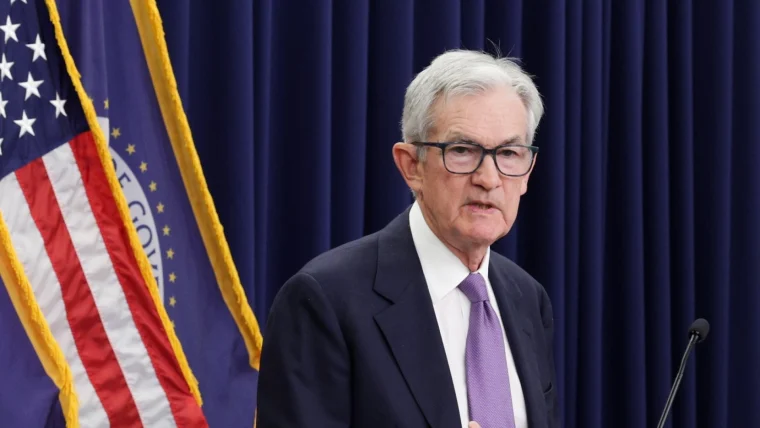
- Trump escalated criticisms, calling Powell a “major loser” on April 16 and urging immediate rate cuts to offset tariff-driven inflation, raising fears of Fed independence erosion.
- On April 21, he suggested Powell’s termination, prompting a 2.36% SPY drop, with the Nasdaq falling 2.55%. White House adviser Kevin Hassett said firing Powell was under study, further unnerving markets.
- By April 22, Trump backed off, stating no intention to fire Powell, stabilizing markets with a 2% SPY gain.
- Trade Policy Signals and Retail CEO Meetings (April 9–21):
- Commerce Secretary Howard Lutnick and Treasury Secretary Scott Bessent signaled ongoing trade talks, with no new deals by April 18. Trump met with CEOs of Walmart, Target, and Home Depot, who warned of supply chain disruptions and consumer price hikes.
- Trump claimed $7 trillion in investment pledges, but no verified deals emerged, maintaining market uncertainty.
- Pharmaceutical Import Probe (April 14–16):
- Tariff Announcements and Rollout (April 2–8):
- Stock Market Impact in April 2025:
- S&P 500 (SPY) Performance:
- Current Price: $513.88 (April 21, 2025), down 2.4% from the previous close of $526.41, reflecting weekly volatility. Weekly range: $536.9 (April 14) to $508.545 (April 16), a 4.3% drop.
- Monthly Trend: SPY fell 13.93% YTD, down 16% from its February 19, 2025, peak of $613.23, nearing bear market territory (20% drop). April saw a 6% plunge on April 3–4, a 9.5% rally on April 9, and a 2.2–2.36% drop on April 16–21.
- Volatility: The CBOE Volatility Index (VIX) hit 50 on April 9, a level seen only during the 2008 crisis and 2020 COVID crash, reflecting “extreme fear.” It eased to 40.86 by April 21 but remains elevated.
- Sector-Specific Impacts:
- Technology:
- Tech stocks cratered after semiconductor and mineral probes. NVIDIA fell 6.87% on April 16, projecting a $5.5 billion hit from chip export curbs. Apple dropped 9%, losing $293 billion alongside Microsoft and NVIDIA in a single day.
- The tech sector (SPLRCT) fell 4.3% on April 16, with the Nasdaq dropping 3.1%, driven by supply chain fears and China’s export bans.
- Automotive:
- Retail and Consumer Discretionary:
- Safe Havens:
- Technology:
- Market Drivers:
- Tariff Uncertainty: The April 2 tariff shock and subsequent probes fueled a $4 trillion S&P 500 loss by March 10, with April’s probes adding pressure. The 90-day pause on April 8 provided relief, but China’s 125% tariffs and ongoing talks kept markets on edge.
- Fed Independence Fears: Trump’s Powell attacks raised concerns about monetary policy stability, driving a 2.36% SPY drop on April 21. His retreat on April 22 calmed markets, but investor trust waned.
- Global Retaliation: China’s rare earth bans and 84% tariffs, plus Canada’s planned $87 billion levies, deepened supply chain woes, hitting tech and autos.
- Recession Fears: J.P. Morgan’s 60% recession probability and Goldman Sachs’ 45% forecast, coupled with a -2.8% Q1 GDP estimate (Atlanta Fed), fueled sell-offs.
- S&P 500 (SPY) Performance:
- Expectations for May 2025:
- Policy Developments:
- Tariff Negotiations: The 90-day tariff pause ends July 7, but May could see interim deals with Canada, Mexico, or Japan, per ongoing talks. A failure to secure deals may trigger tariff reinstatement, risking another 5–10% SPY drop.
- Critical Minerals Report: The Section 232 probe’s report, due in months, may propose tariffs by late May, impacting tech and auto stocks. Investors should watch Commerce Department updates.
- Fed Policy: The Fed’s May 6–7 meeting is unlikely to cut rates (88% chance of holding at 4.25–4.5%, per CME FedWatch), as Powell assesses tariff-driven inflation. Trump’s pressure may persist, risking market jitters.
- Market Outlook:
- SPY Projection: SPY could trade between $500–$530 by May 31. A trade deal or positive Q1 earnings (8.1% S&P 500 growth expected) could push SPY to $525–$530. Tariff escalations or weak earnings may drive it below $500, nearing bear market territory.
- Sector Expectations:
- Technology: NVIDIA, Apple, and AMD face ongoing supply chain risks, with potential 3–5% drops if chip tariffs advance. Monitor Q1 earnings (e.g., Tesla, Alphabet, April 28–30).
- Automotive: Stellantis and Tesla may see volatility, with CARZ ETF potentially falling 5% absent tariff relief. Domestic-focused firms (e.g., Ford) could outperform.
- Retail: Walmart and McDonald’s may hold steady, but XLY could dip 2–3% if consumer spending weakens further (retail down 13%).
- Safe Havens: Gold (GLD) may hit $3,500/ounce, and utilities (XLU) could gain 1–2%, as recession fears persist.
- Key Catalysts:
- Q1 earnings (April 28–May 10) from tech (NVIDIA, Tesla), retail (Walmart), and industrials (Boeing, Lockheed Martin) will drive sentiment. Strong results could offset tariff fears.
- The Fed’s May meeting and consumer sentiment data (May 30) will signal inflation and spending trends. A 44% chance of higher unemployment (New York Fed) may dampen markets.
- Trade talks with Japan (ongoing) or Canada could yield breakthroughs, lifting SPY 3–5%.
- Investor Strategy:
- Short-Term: Buy gold (GLD) or utilities (XLU) on dips for stability. Hold Walmart for defensive retail exposure. Avoid tech (XLK) until tariff clarity emerges.
- Long-Term: Allocate 5–10% to infrastructure ETFs (IFRA) for potential domestic manufacturing gains. Hedge with bonds (TLT) against recession risks.
- Risks: A 60% recession probability, rising inflation (Powell’s 4% forecast), and tariff escalations could push SPY into a bear market. Monitor trade deal progress and earnings closely.
- Policy Developments:
- Investor Considerations:
- Market Impact Summary:
- Trump’s April actions—tariff shocks, Powell attacks, and probes—drove SPY from $536.9 to $513.88, a 4.3% monthly drop, with a peak 9.5% rally on April 9. Tech and autos bore the brunt, while gold and utilities shone.
- The S&P 500’s 16% decline from its February peak reflects unprecedented volatility, worsened by a 17% drop since Trump’s inauguration, the worst presidential start since 1957.
- Opportunities:
- Defensive sectors (utilities, gold) and domestic-focused firms (Walmart) offer stability amid trade war chaos.
- Q1 earnings and trade deal breakthroughs could spark a 3–5% SPY rebound in May.
- Risks:
- Strategy:
- Diversify with 5–10% in safe havens (gold, bonds) to hedge volatility. Trim tech exposure (e.g., NVIDIA, Apple) and focus on earnings-driven picks.
- Watch May’s Fed meeting, Q1 earnings, and trade talks for market direction.
- Market Impact Summary:
- Why It Matters: Trump’s April 2025 moves—tariffs, Fed attacks, and trade uncertainty—unleashed a rollercoaster for the stock market, with SPY’s 4.3% drop reflecting investor fears of trade wars and inflation. As May looms, trade deals and earnings could offer relief, but recession risks and tariff probes demand caution. At GLHR Investing, we’re here to help you navigate this storm and build wealth through informed choices.
Stay ahead with GLHR Investing—let’s conquer the volatility!
Disclaimer: GLHR Investing is not a financial adviser; please consult one.