

Trump’s trade policies shake markets and wallets in April 2025.
At GLHR Investing, we’re tracking the moves that shake your wallet and portfolio. This week, President Donald Trump rolled out significant policy actions, from tariff investigations to regulatory shifts, sparking market volatility and consumer unease. With tariffs on pause but looming, and inflation at 3%, how are these decisions affecting you? Here’s a breakdown of Trump’s actions for April 14–18, 2025, and their ripple effects on consumers and investors.
- Key Actions by Trump (April 14–18, 2025):
- Critical Minerals Tariff Investigation (April 15):
- Trump signed an Executive Order launching a Section 232 investigation into imports of processed critical minerals (e.g., rare earth metals, lithium), vital for automakers, aerospace, semiconductors, and defense.
- The probe assesses supply chain vulnerabilities and could lead to tariffs replacing the April 2 reciprocal tariffs if imports threaten national security. A report with recommendations is due within months.
- Tariff Policy Updates:
- Trump announced potential tariff adjustments on semiconductors, signaling flexibility for some companies, with a specific rate to be set within the week.
- The 90-day pause on reciprocal tariffs (10% baseline, up to 50% on countries like China) from April 8 held, but no new pauses or escalations were confirmed this week.
- China’s suspension of rare earth exports (e.g., magnets) in retaliation to U.S. tariffs tightened global supply chains, impacting tech and auto sectors.
- Regulatory and Trade Signals:
- The Commerce Department initiated probes into pharmaceutical and semiconductor imports, a precursor to potential tariffs, amplifying investor uncertainty.
- Trump’s team, including U.S. Trade Representative Jamieson Greer, defended tariffs as a tool to boost manufacturing, but no new trade deals were finalized this week.
- Public Statements:
- Trump reiterated tariffs as a “medicine” for economic competitiveness, dismissing recession fears and promising market booms, despite a 17% S&P 500 drop since his inauguration, the worst start for any president since 1957.
- Commerce Secretary Howard Lutnick claimed tariffs would lower grocery prices long-term by opening foreign markets, a view contested by economists.
- Critical Minerals Tariff Investigation (April 15):
- Impact on Consumers:
- Price Increases:
- The Penn Wharton Budget Model projects Trump’s tariffs (as of April 8) will raise consumer prices by 2.3%, costing households $3,800 annually, with low-income families hit 2.5 times harder than the top 10%.
- This week’s semiconductor and mineral probes signal potential price hikes for electronics (e.g., smartphones, laptops) and vehicles, as 90% of U.S. chips rely on Asian imports. A $2,300 iPhone is possible if tariffs hit Apple’s supply chain.
- China’s rare earth export ban could raise costs for EV batteries and appliances, with no immediate relief as domestic mining lags.
- Spending Behavior:
- Consumer sentiment hit a 12-year low (Conference Board Index: 50.8), with February’s 16% drop persisting into April due to tariff fears and 6.7% inflation expectations.
- Retail spending fell 13%, with consumers cutting back on discretionary items (e.g., travel, dining), as seen in Delta’s slashed 2025 guidance due to trade war impacts.
- Fast-food chains (e.g., McDonald’s, Burger King) saw investor bets rise as consumers trade down to cheaper meals, per industry data.
- Economic Burden:
- Tariffs act as a regressive tax, raising costs for essentials like groceries and apparel. The Tax Foundation estimates a $1,300 annual tax hike per household in 2025.
- Volkswagen’s plan to list 25% tariff costs on car stickers from Mexico and Europe signals transparent price hikes, potentially adding thousands to vehicle prices.
- Price Increases:
- Impact on Investors:
- Market Volatility:
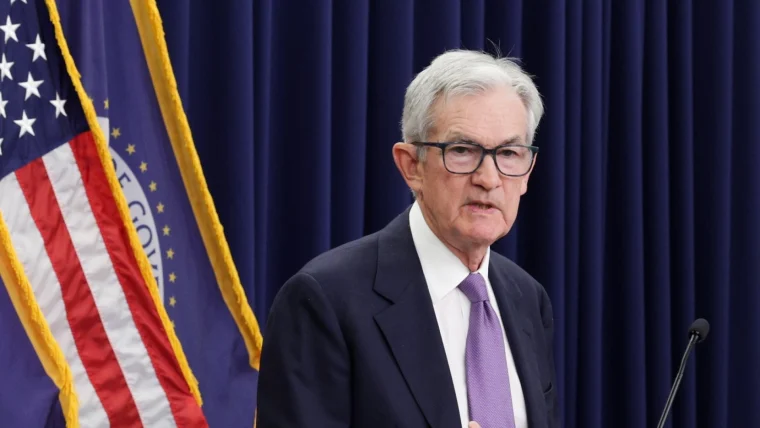
- The S&P 500 fell 2.24% on April 16, with the Dow down 700 points (1.73%) and Nasdaq off 3.07%, driven by Federal Reserve Chair Jerome Powell’s warning of “unprecedented” tariff effects on inflation and growth.
- This week’s semiconductor probe announcement triggered a tech sell-off, with Apple (-9%), Microsoft (-3%), and NVIDIA (-5%) losing $293 billion collectively in a single day.
- Posts on X highlight “whiplash” from tariff uncertainty, with markets misinterpreting exemptions as easing, only to face new probes.
- Sector-Specific Effects:
- Technology: Semiconductor and mineral import probes threaten margins for Apple, NVIDIA, and Intel, with chip tariffs potentially raising costs 20–30%. Investors fled to bonds, pushing 10-year Treasury yields to 4%.
- Automotive: Stellantis paused production at Mexican and Canadian plants, signaling supply chain disruptions. Auto ETFs (e.g., CARZ) face volatility as tariffs hit 25% on imported vehicles.
- Retail: Walmart held its 2025 outlook but noted tariff-driven cost pressures, while Home Depot sources 50% of goods domestically, offering some resilience. Consumer discretionary ETFs (XLY) dipped 3%.
- Safe Havens: Gold surged 3% to $3,300/ounce, with Goldman Sachs forecasting $3,700 by year-end, as investors sought refuge amid trade war fears.
- Investor Sentiment:
- The Economic Policy Uncertainty Index rose to 104, the second-highest ever, reflecting investor fears of erratic policy, per the National Federation of Independent Business.
- J.P. Morgan raised its recession probability to 60% if tariffs persist, with GDP projected to fall 1% in 2025, including retaliation effects.
- X posts describe a “financial forest fire,” with markets facing the worst volatility since COVID, driven by Trump’s tariff flip-flops.
- Market Volatility:
- Broader Economic Context:
- Inflation and Growth: Powell warned tariffs could push inflation above 4%, with GDP growth slowing to 2.2% globally (0.6% below baseline), per the World Trade Organization.
- Consumer Confidence: The University of Michigan’s consumer sentiment index fell 16% YOY, with fears of rising costs (e.g., eggs up 20% since January) driving caution.
- Market Performance: The S&P 500’s 17% drop since Trump’s inauguration outpaces any presidency since 1957, contrasting with a 68% gain in his first term (2017–2021).
- Retaliation Risks: China’s 84% retaliatory tariffs on U.S. goods and Canada’s $87 billion planned levies (paused) threaten exports, hitting agriculture and manufacturing.
- Investor Considerations:
- Opportunities:
- Short-Term: Buy gold (GLD) or fast-food stocks (e.g., McDonald’s) on dips, as consumers shift to budget options. Walmart’s domestic sourcing offers stability.
- Long-Term: Infrastructure ETFs (IFRA) may benefit from domestic manufacturing if tariffs persist, while energy stocks (XLE) gain from Trump’s drilling push.
- Risks:
- Tariff probes (semiconductors, minerals) signal higher costs for tech and autos, with Apple and Stellantis most exposed. A 20% recession risk looms if consumer spending tanks.
- Policy uncertainty, with no clear tariff timeline, deters corporate investment, per Bank of America’s CEO.
- Strategy:
- Diversify with 5–10% in safe havens (gold, bonds) to hedge volatility. Avoid tech-heavy ETFs (XLK) until tariff clarity emerges.
- Monitor Q1 earnings (April 23–30) from Walmart, Stellantis, and tech giants, plus tariff updates by April 30, for market signals.
- Opportunities:
- Why It Matters: Trump’s actions this week—pushing critical mineral probes and signaling tariff flexibility—have deepened uncertainty, raising costs for consumers and shaking investor confidence. While gold and budget retailers offer refuge, tech and auto stocks face headwinds. At GLHR Investing, we’re here to help you navigate this chaos and build wealth through smart, steady moves.
Stay vigilant with GLHR Investing—let’s weather the storm together.